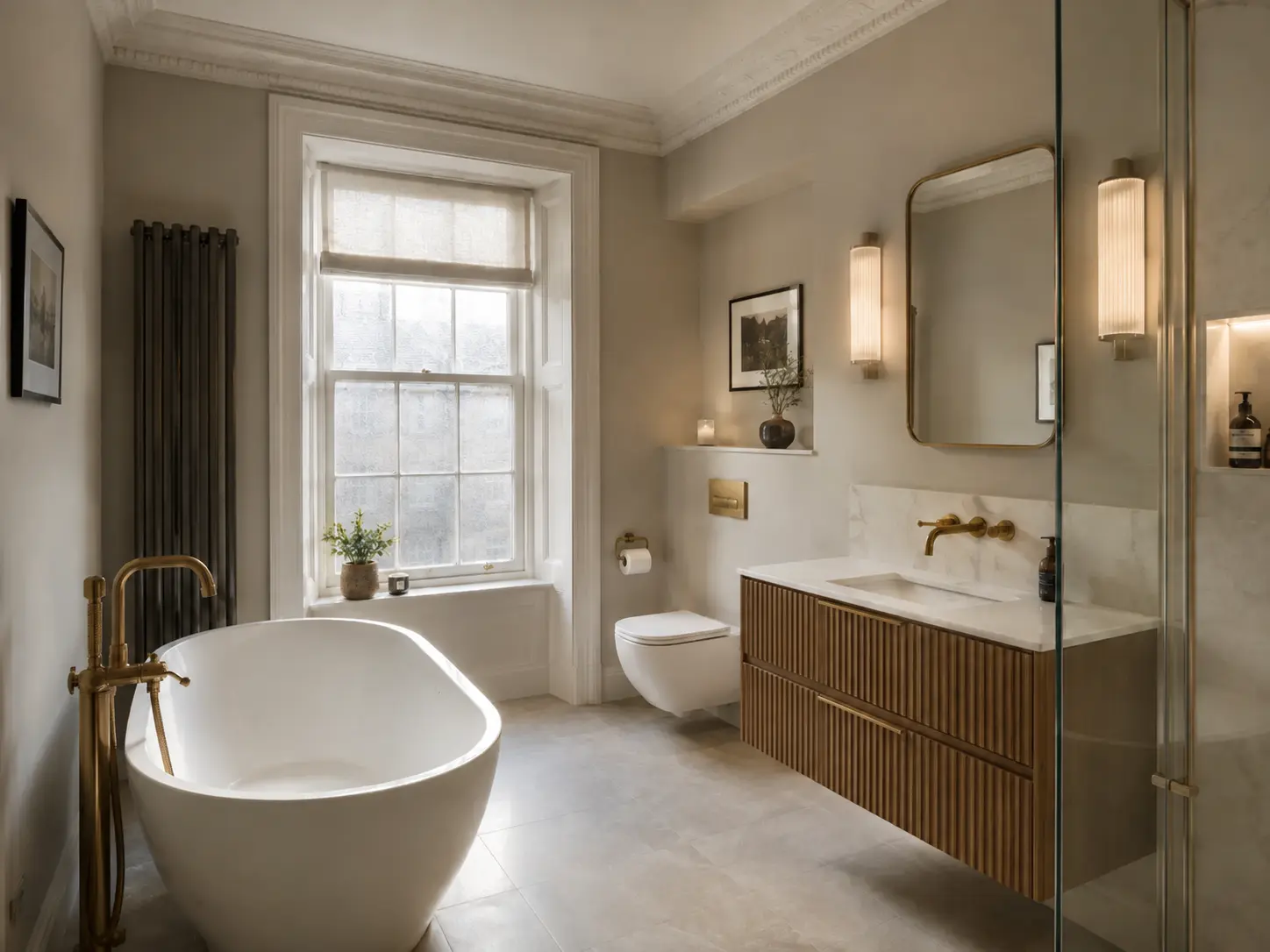
Begin With the Bathroom You Want Replaced
A useful bathroom price starts with a description of the job. Are you replacing the whole room, keeping the bath and changing the rest, or turning an unused bath into a shower? Tell each company the same thing when requesting quotes. Otherwise, you may receive prices for different amounts of work.
List the improvements that matter most. You might want somewhere to put towels, a shower that is easier to enter or a basin that leaves more walking space. These priorities help you judge the proposed bathroom, rather than choosing a package only because its starting price looks attractive.
Room Size Does Not Tell You the Whole Cost
More wall and floor area usually means more material to finish, but a small room can still involve awkward work. A window beside the shower, limited access to pipes or damage beneath the floor may affect the installation. The fitter needs to see the room before confirming the work.
Show any leaks, loose fittings or recurring damp at the visit. Explain what happens and when, without feeling you need to diagnose the fault yourself. The quote should identify known preparation and explain how extra repairs would be discussed if something is uncovered during removal.
For the work involved in your own room, see our bathroom Renovations in Edinburgh service and tell us what you want to change.
Compare the Price of Keeping or Moving Fittings
Keeping a useful layout can avoid some pipework changes. It does not mean the existing plumbing can always stay untouched, because the new products still need suitable connections and the condition must be checked. Ask what work is needed in either case.
If moving the toilet or shower would make the room much easier to use, compare that option on a measured plan. Find out where the new pipes would run, what would be opened and how the surrounding surfaces would be repaired. Then weigh the complete extra cost against the practical improvement.
Name the Bathroom Products in the Quote
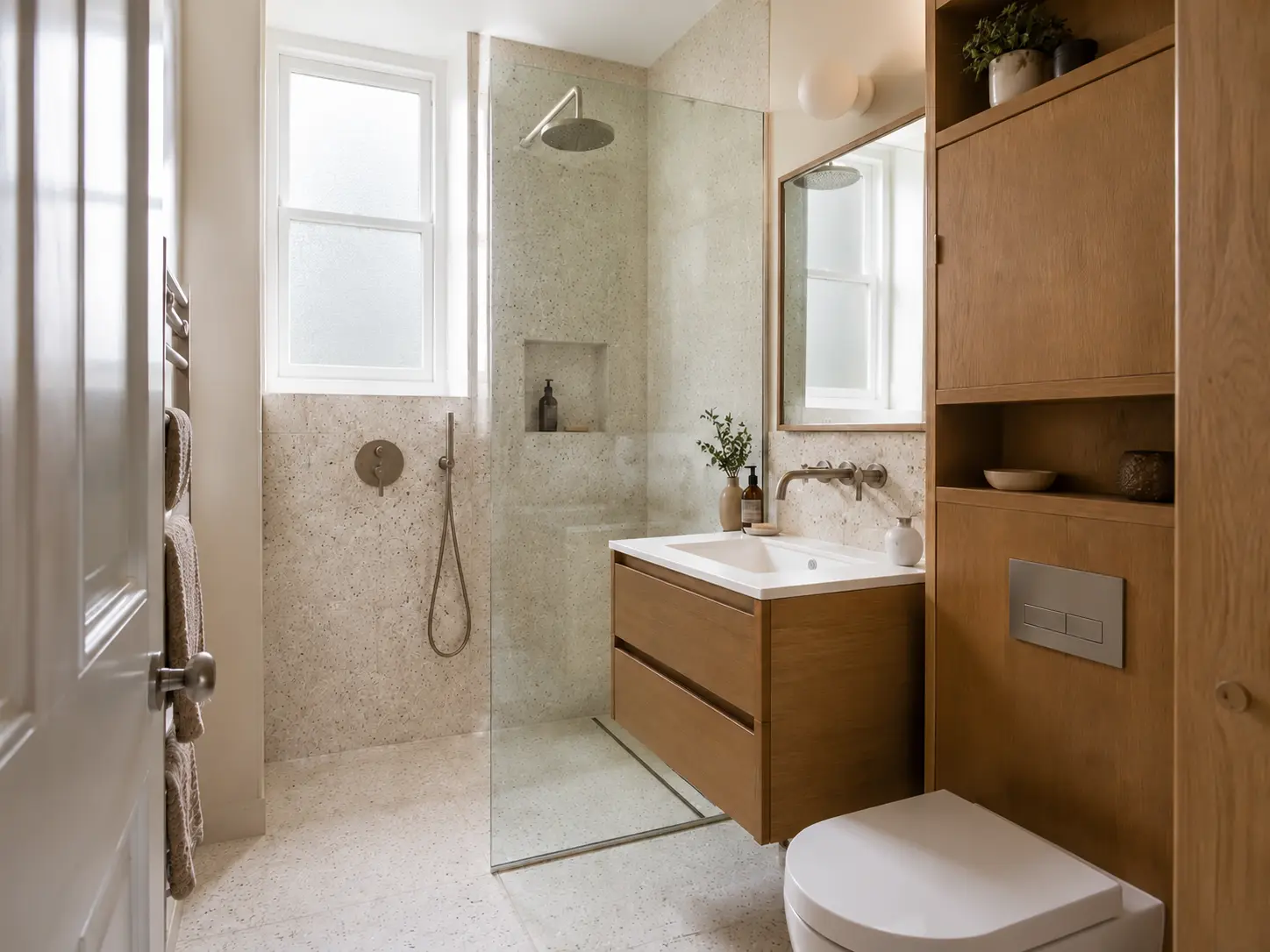
The quote should identify the bath or shower, toilet, basin, cabinet and taps. Include the screen, seat, flush control and other parts needed to complete the fittings. A price for a toilet pan alone cannot be compared fairly with one that includes its concealed cistern and support frame.
Keep optional upgrades separate. You may prefer to pay for usable drawers instead of a special tap colour, or choose a simpler mirror to keep a shower improvement within budget. Record the final product names and finishes so everyone knows which version has been agreed before ordering.
Look Beneath the Wall and Floor Finishes
The cost of tiles or panels is only part of the wall price. Removal, repairs, preparation, waterproofing where required, adhesive, trims and fitting can all form part of the work. Ask how the edges around the bath, window and shower will be finished.
Flooring also needs a suitable base. A new covering cannot repair a leaking or damaged floor beneath it. Check what preparation is included and how a change in floor height affects the doorway and fittings. Comparing the full installed finish is more useful than comparing a price per panel or tile.
Check the Smaller Jobs and Household Arrangements
Lighting, extraction, heating and mirrors should each be identified as staying, moving or being replaced. Ask who carries out the electrical work and what paperwork applies. Include the ceiling, doorway and any decorating you expect, rather than assuming all finishing work is covered by a general phrase.
Discuss removal of the old suite, waste collection, storage and the route through the home. Stairs or shared access can affect arrangements. If this is your only bathroom, ask when facilities will be unavailable and plan suitable alternatives. Those practical costs belong in your overall budget too.
Agree How Changes and Payments Will Work
Read the total payable, including applicable VAT, alongside the description of work. Ask whether the document is a quote or an estimate and which items remain undecided. Citizens Advice Scotland recommends getting home-improvement work and price details in writing before work starts.
Keep any later changes in writing as well. This applies to a different cabinet you choose and to a repair found when the old bathroom comes out. The change should explain the work, price and effect on timing. Read payment stages before booking, and keep receipts for money paid.
Choose the Quote You Can Understand
Place the proposals beside the same list of requirements. If one price differs, ask which products or work account for it. A lower total may cover less; a higher total may include an upgrade you do not need. Neither figure tells you the answer on its own.
Before accepting, check the drawing, products, installation work, exclusions and expected schedule together. Keep a copy you can refer to during fitting. A good comparison leaves you knowing what the bathroom will include, what you will pay and how any further decision will be handled.